

Diet
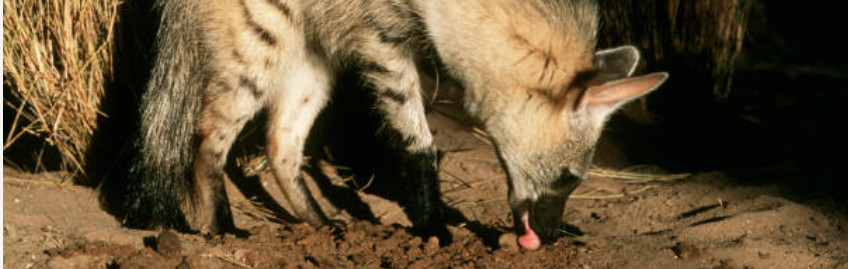
Image: background, (Gallo images, 2016)
The southern aardwolf is an insectivorous carnivore, and a very picky eater, mostly consuming only two types of termites:
Image: below, Snouted Harvester Termite (trinervitermes trinervoides), photographed by Johan Pretorius (2017)
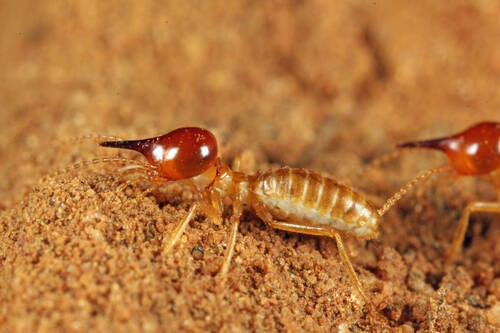
Trinervitermes trinervoides
The southern aardwolf feeds almost entirely on Trinervitermes trinervoides during the summer season, yet they become more inactive during the colder months, retreating underground (Williams et al., 1997). These termites live in dirt mounds within grasslands, where they remain inactive during the day but emerge at night (Williams et al., 1997).
Image: below, Northern Harvester Termite (Hodotermes mossambicus) photographed by Graham Montgomery (2015)
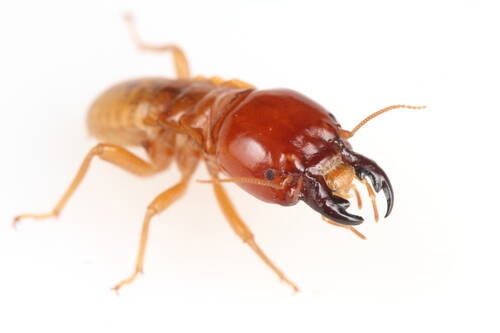
Hodotermes mossambicus
During the winter, the aardwolf must switch to foraging on Hodotermes mossambicus , as it is now the predominant active termite species (Williams et al., 1997). This termite can forage at any time of the day, yet is mainly active during the daytime. H. mossambicus are more sparse on the soil surface when foraging, so they provide less food for the hungry aardwolf (Williams et al., 1997).
Although termites make up the overwhelming majority of the aardwolf's diet, other invertebrates have occasionally been recorded in their feeding habits. These include ants, beetles, millipedes, sun spiders, and scorpions (Cooper and Skinner, 1979; de Vries et al., 2011)
Nutrients & Toxins
Limiting Nutrients
In terms of no established dietary deficiency or limiting nutrient has been identified in the available literature due to the fact that the research on it is scarce, but it's known that the T. trinervoides have very poor nutritional quality, which is a common factor with invertebrates (Anderson, 1994). It could be said that a limitation for the aardwolf is that their picky diet is made up of 2 species or termite, both of which not nutritionally efficient. To compensate for this the aardwolf ingests thousands of termites per night to meet their requirements (Anderson, 1994)
Toxins
The Trinervitermes trinervoides has a special chemical-defence system to ward off predators, it consists of a sticky secretion filled with diterpenes dissolved in monoterpenes (Richardson and Levitan, 1994). This secretion is very harmful to organs and the nervous system, so it is largely avoided by other insectivores, except for the aardwolf (Richardson and Levitan, 1994). It is not clear what physiological adaptation the southern aardwolf has to be able to withstand these noxious chemicals, but it is proposed that there was an inherited evolutionary adaptation from civet-like ancestors (phylogenetic preadaptation) (Richardson and Levitan, 1994).
Proximate Analysis of Aardwolves Food Sources
Trinervitermes trinervoides
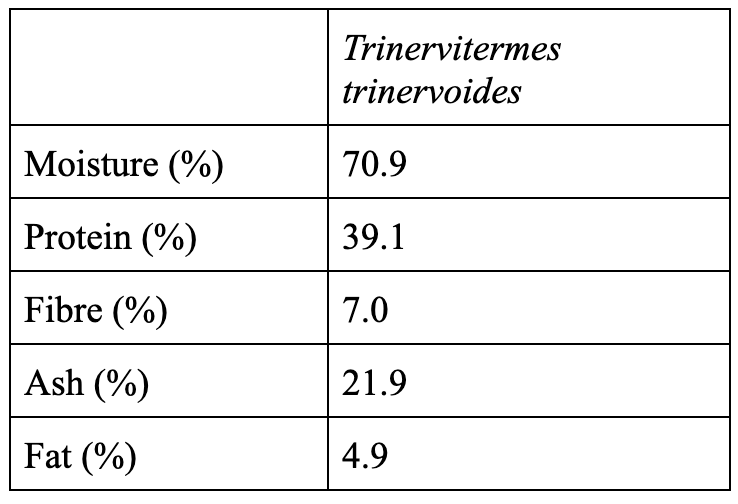
Table 1. Proximate analysis of T. trinervoides (Anderson, 1994)
These values are reported in the literature by Anderson (1994), yet they are reported on a dry matter basis, so for an as-fed basis:
Protein (%): 11.38
Fibre (%): 2.04
Ash (%): 6.37
Fat (%): 1.43
NFE (%) = 100 - (70.9 + 6.37 + 11.38 + 1.43 + 2.04)
NFE (%) = 7.88% as fed
ME (kcal/kg as fed) =[(9 × 1.43) + (4 × 11.38) + (4 × 7.88)] × 10
ME (kcal/kg as fed) = 899.1 kcal/kg as fed
Hodotermes mossambicus
Complete proximate analysis data for Hodotermes mossambicus were not available, and since the aardwolf rarely consumes other insects and this is not a typical behaviour, missing nutrient values were estimated using the published values for soldier Trinervitermes trinervoides termites (Anderson, 1994). This species was selected as a comparison because it is another grass-harvesting termite that forms part of the aardwolf's natural diet (Symes and Woodborne, 2011; Badenhorst et al., 2024). Both species are consumed by the aardwolf, and their reported moisture contents are similar, with T. trinervoides being 70.9% and H. mossambicus being 76.% (Anderson, 1994; Mitchell et al., 2026). Both species are grass-harvesting termites that primarily consume plant material and are naturally consumed by aardwolves. Their similar feeding ecology provides a reasonable basis for using T. trinervoides as a nutritional comparison in the absence of H. mossambicus data.
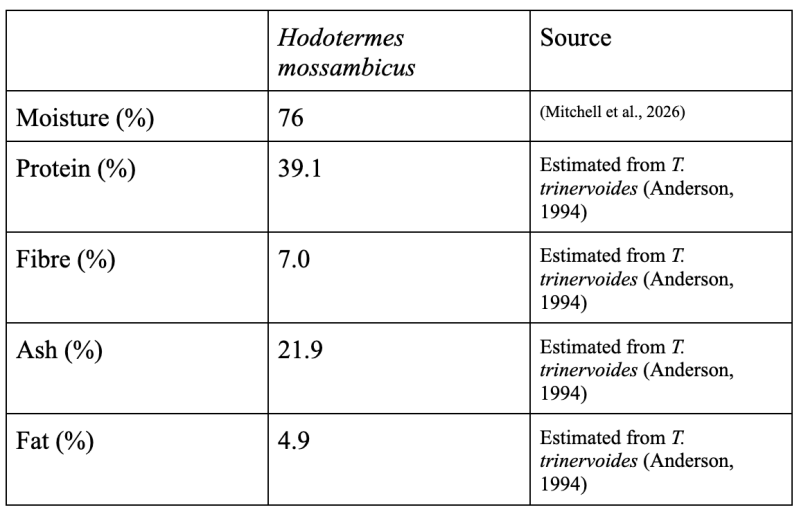
Table 2. Proximate analysis of H. mossambicus, estimated using information from Anderson (1994) and moisture from Mitchel et al. (2026).
NFE (%) = 100 - (76 + 6.37 + 11.38 + 1.43 + 2.04)
NFE (%) = 2.78% as fed
ME (kcal/kg as fed) =[(9 × 1.43) + (4 × 11.38) + (4 × 2.78)] × 10
ME (kcal/kg as fed) = 695.1 kcal/kg as fed
* Disclaimer: Remember that the H. mossambicus values are estimated from T. trinervoides since its own values are unreported.