

Digestive Anatomy
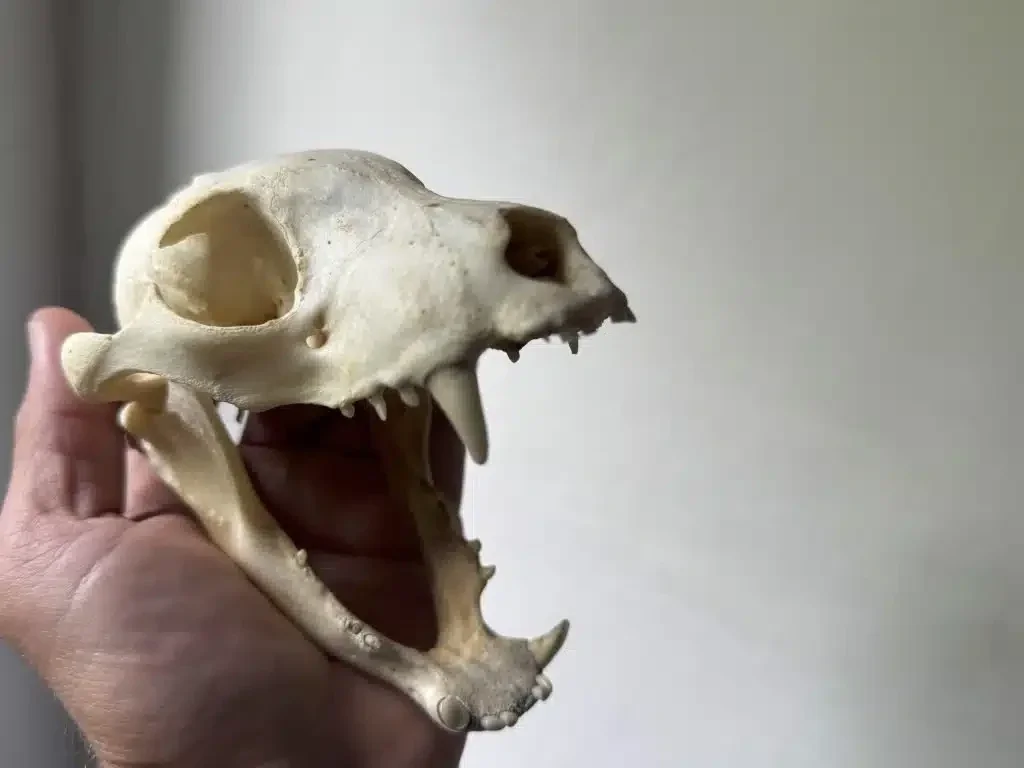
Image: background, (Sheldon, 2025)
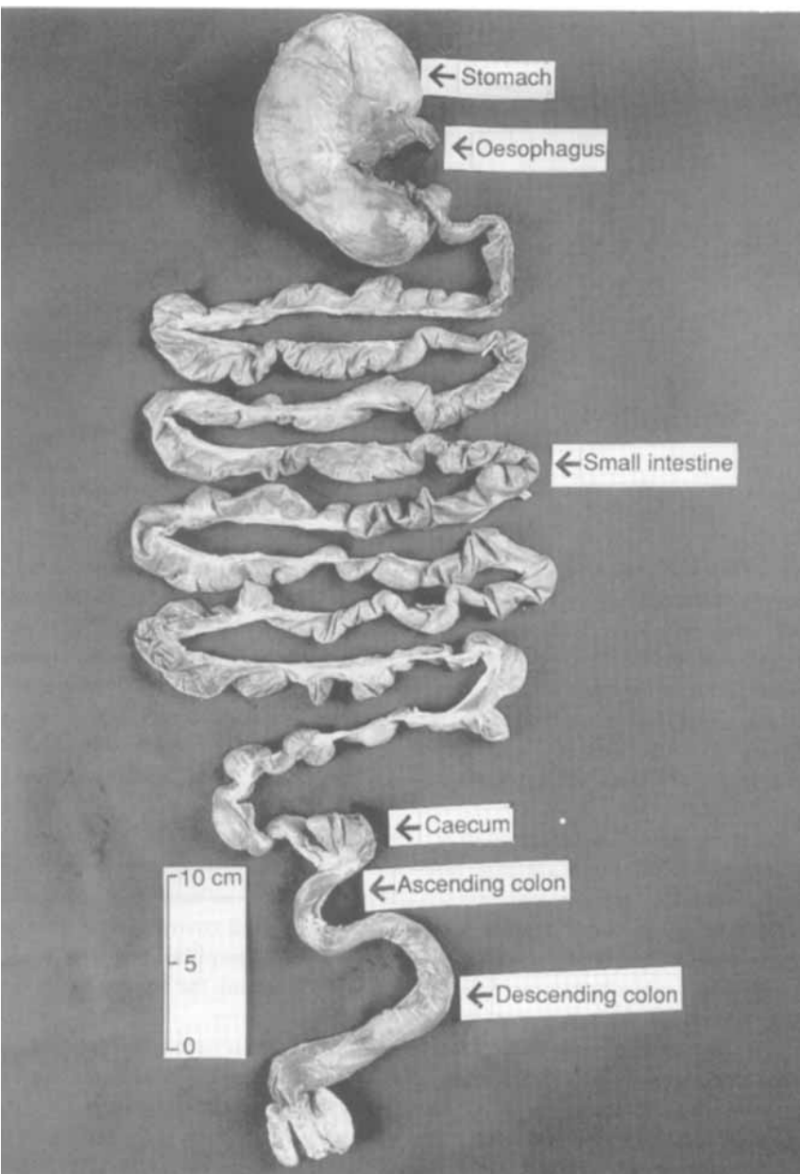
Image: above, the gastro-intestinal tract of an aardwolf (Anderson et al., 1992)
Mouth
The aardwolf has a dental structure typical of carnivores, with large canines and cheek teeth. However, the aardwolf's cheek teeth are greatly reduced compared to those of other Hyaenidae species, likely due to its insectivorous nature (Anderson et al., 1992). The aardwolf's tongue is highly modified, with large conical papillae present near the tip of the tongue and large incisor papillae towards the base of the tongue (Anderson et al., 1992).
Gastrointestinal tract
The aardwolf's gastrointestinal tract follows the general structure found in carnivores, including the stomach, small intestine, caecum and colon. Its stomach is simple and elongated, with a constriction that separates it into two regions: the larger fundic region and the smaller pyloric region (Anderson et al., 1992). The fundic region contains a smooth cardiac region and a fundic portion with rugae (Anderson et al., 1992). In comparison, the pyloric region has a smooth surface with a few irregular folds and relatively thick, muscular walls (Anderson et al., 1992).
Adaptations
As mentioned previously, there has been a reduction in cheek teeth in the aardwolf since their eating habits differ from other hyenas, and they typically swallow their termites whole for efficiency (Anderson et al., 1992). Since they swallow most of their termites, the aardwolf's muscular region of the pyloric area compensates for the lack of mastication (Anderson et al., 1992). Lastly, the water absorption from the aardwolf's distal colon is of great significance since they do not drink much water and receive the majority of their water intake from the termites they eat (Anderson et al., 1992).
In comparison to the domestic dog, the aardwolf has a shorter small intestine, and the reasoning behind this is uncertain since short small intestines usually correlate with more digestible food (Anderson et al., 1992). Given the fact that termites are not completely digestible, it is simply suggested that the aardwolf's anatomy is more geared towards rapid ingestion of termites (Anderson et al., 1992).

Image: above, a southern aardwolf (Proteles cristata) skull where the reduced molars can be seen (Sklmsta, 2008).

Image: above, a spotted hyena (Crocuta crocuta) skull with larger, more frequent molars (Team Africa Geographic, 2021).